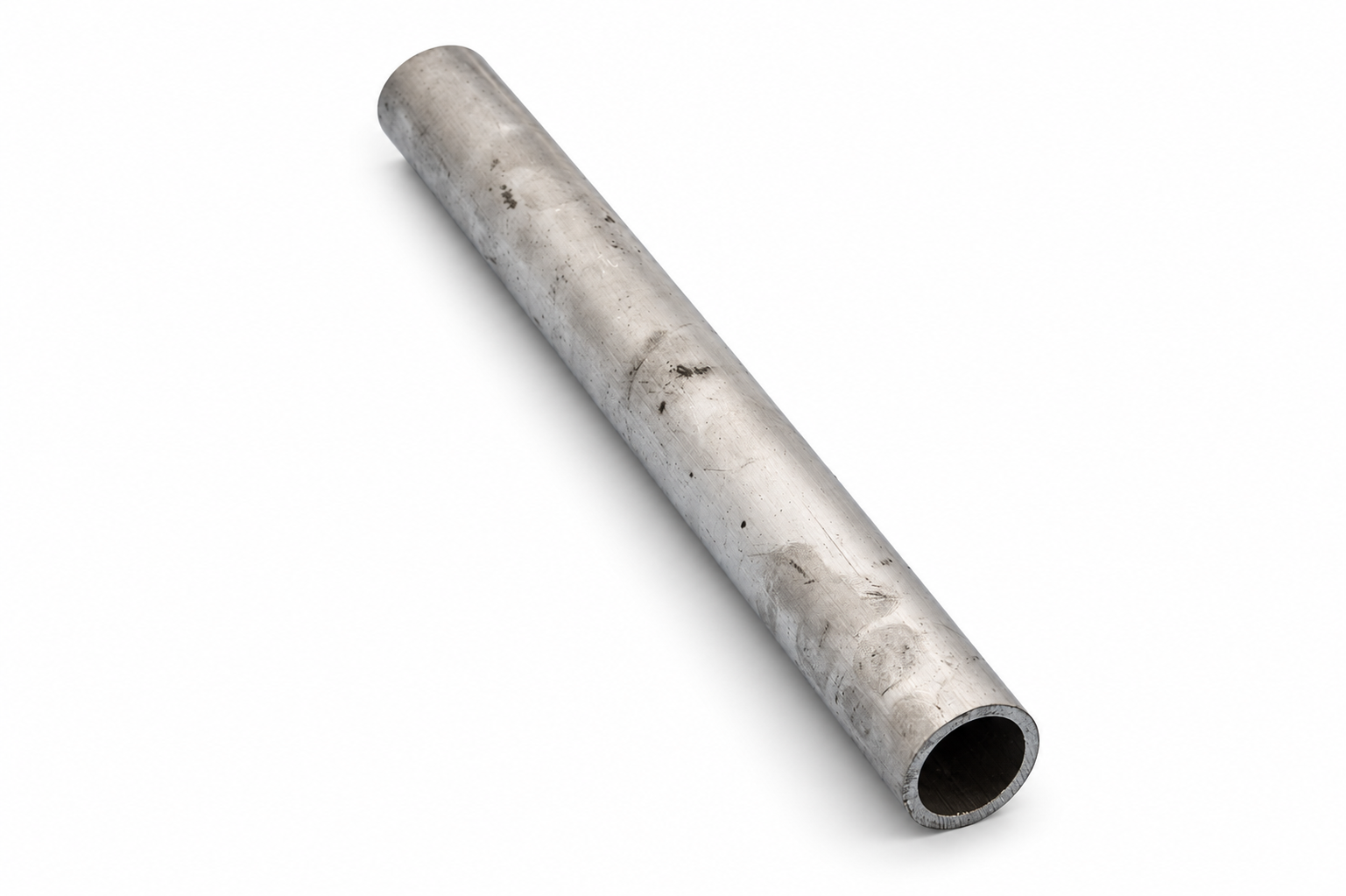
Aluminum pipe options
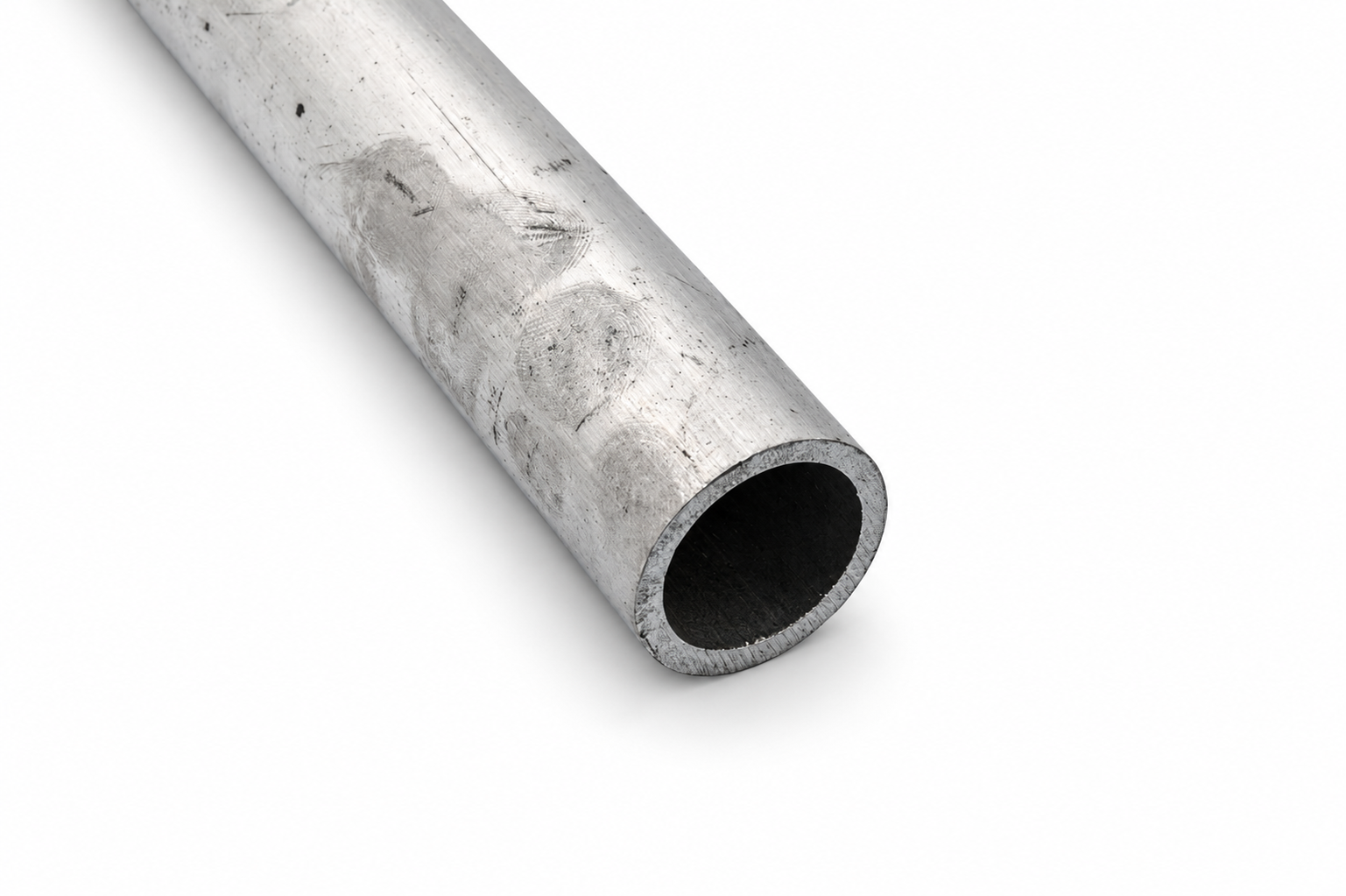
Our standard choice for aluminum air piping. Schedule 40 pipe is available on request.
Pipe materials & wall schedules
Explore aluminum and 304 stainless steel, compare Schedule 10 and Schedule 40, and see our actual pipe samples.
Quality aluminum & stainless steel options
We use quality aluminum pipe with thicker walls in most sizes than the thin-wall tubing used in competing systems. Schedule 10 is our standard choice, with Schedule 40 pipe available on request. Stainless steel options are also available to suit your application.
Discuss your piping materials ↗Our standard choice for aluminum air piping. Schedule 40 pipe is available on request.
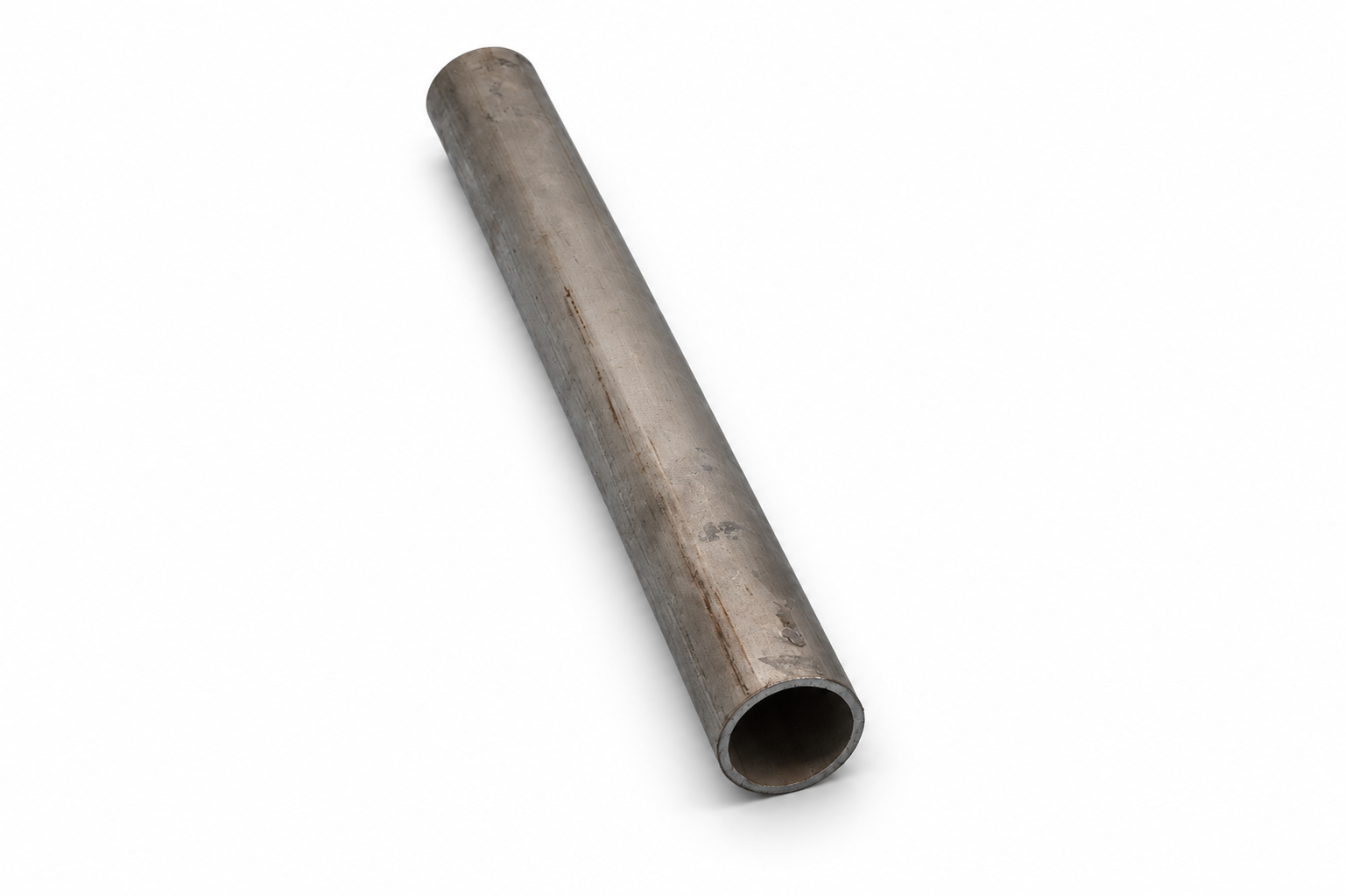
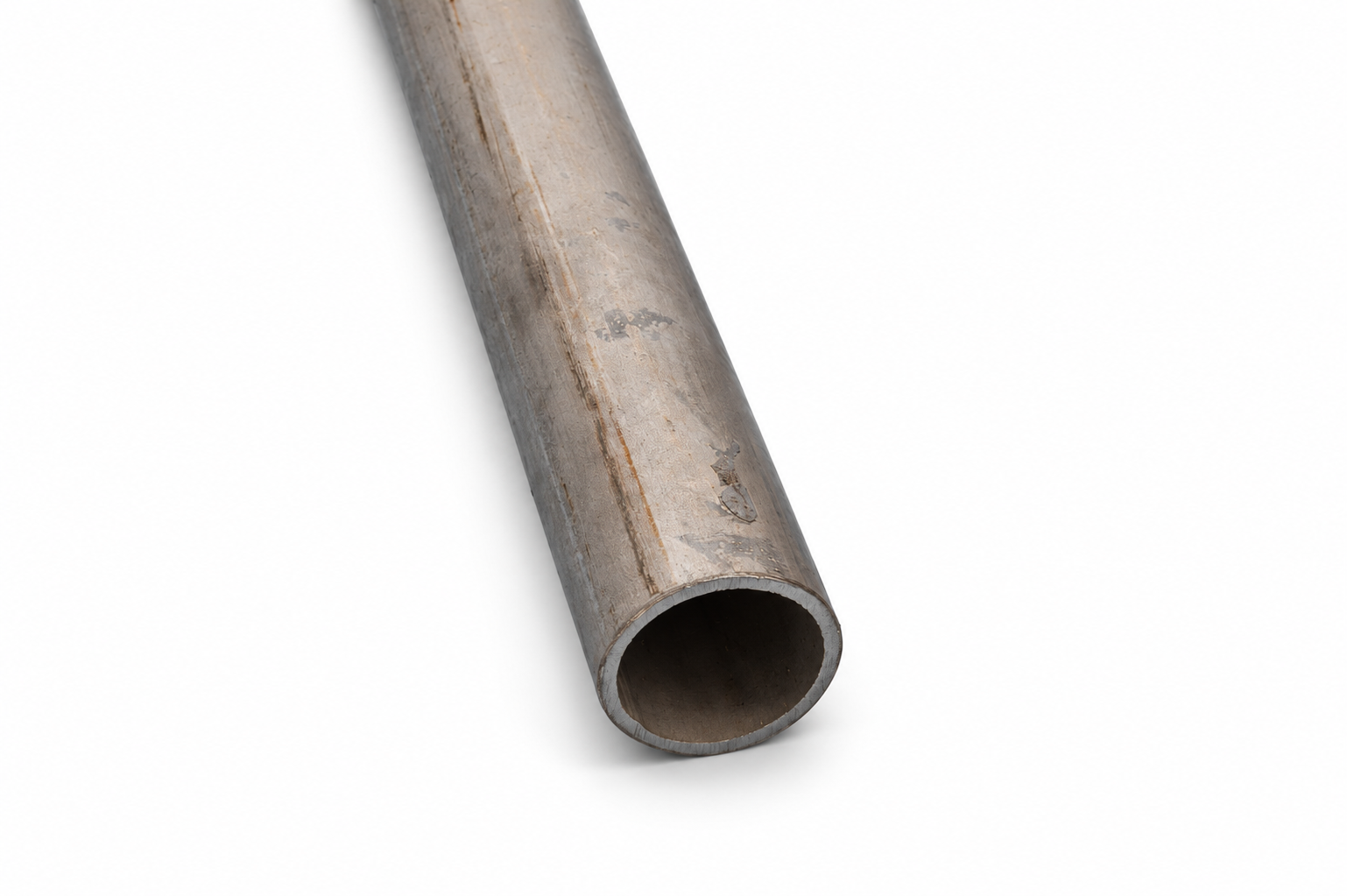
Discuss stainless steel piping and the appropriate schedule for your application.
Confirm the exact material, pipe size and wall schedule with your quote.
Understand your options
Wall schedule and material are two separate choices. Here’s how they differ, shown with our actual pipe samples.
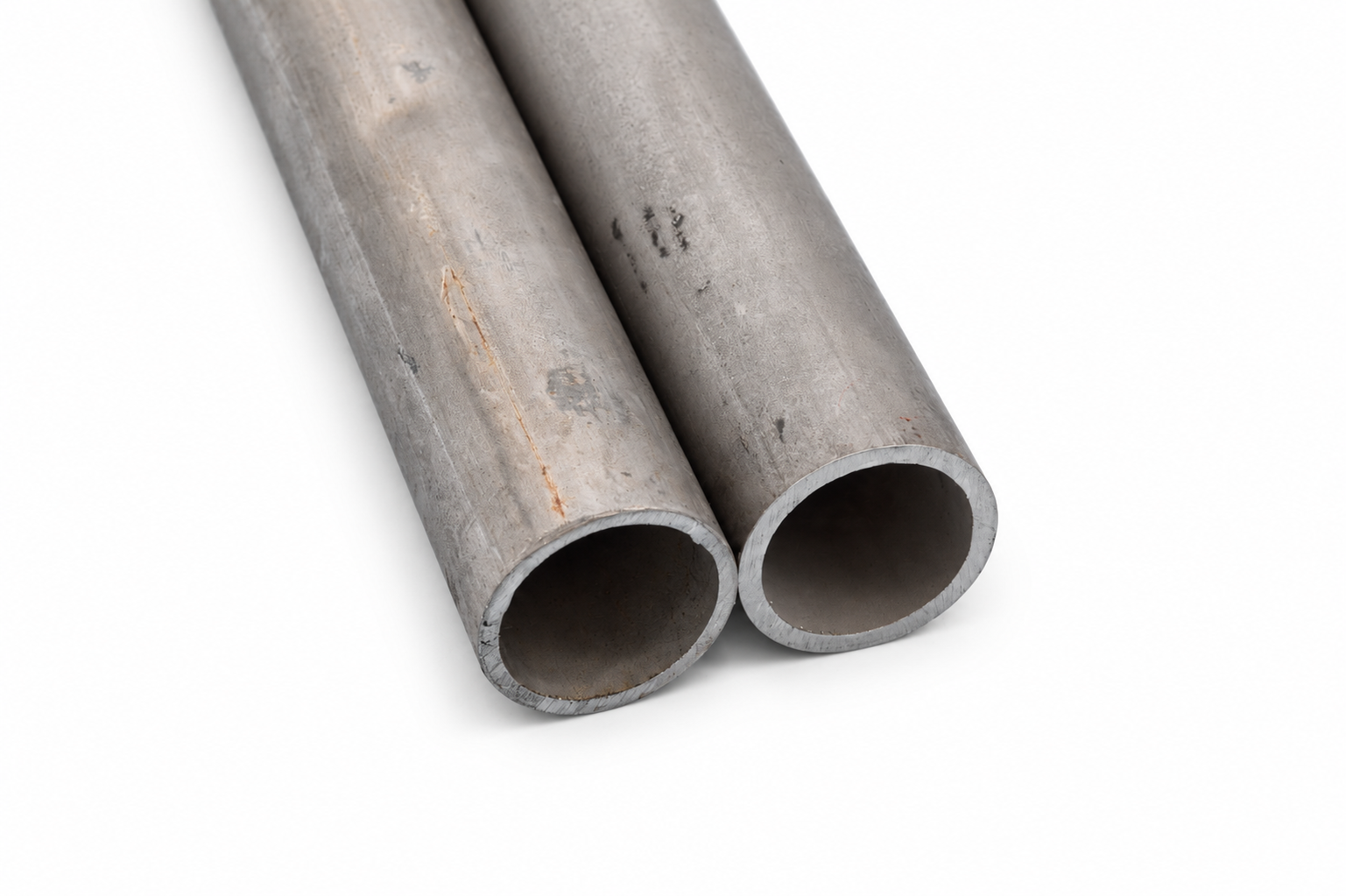
01 / Wall thickness
The schedule describes the pipe wall thickness for a given nominal pipe size. Schedule 40 has a thicker wall than Schedule 10. At the same nominal size and dimensional standard, the outside diameter stays the same; the thicker wall leaves a smaller inside opening.
Schedule numbers are not pressure ratings. We confirm material, size, operating conditions and the complete connection system with your quote. We’ve also used Schedule 80 in certain applications.
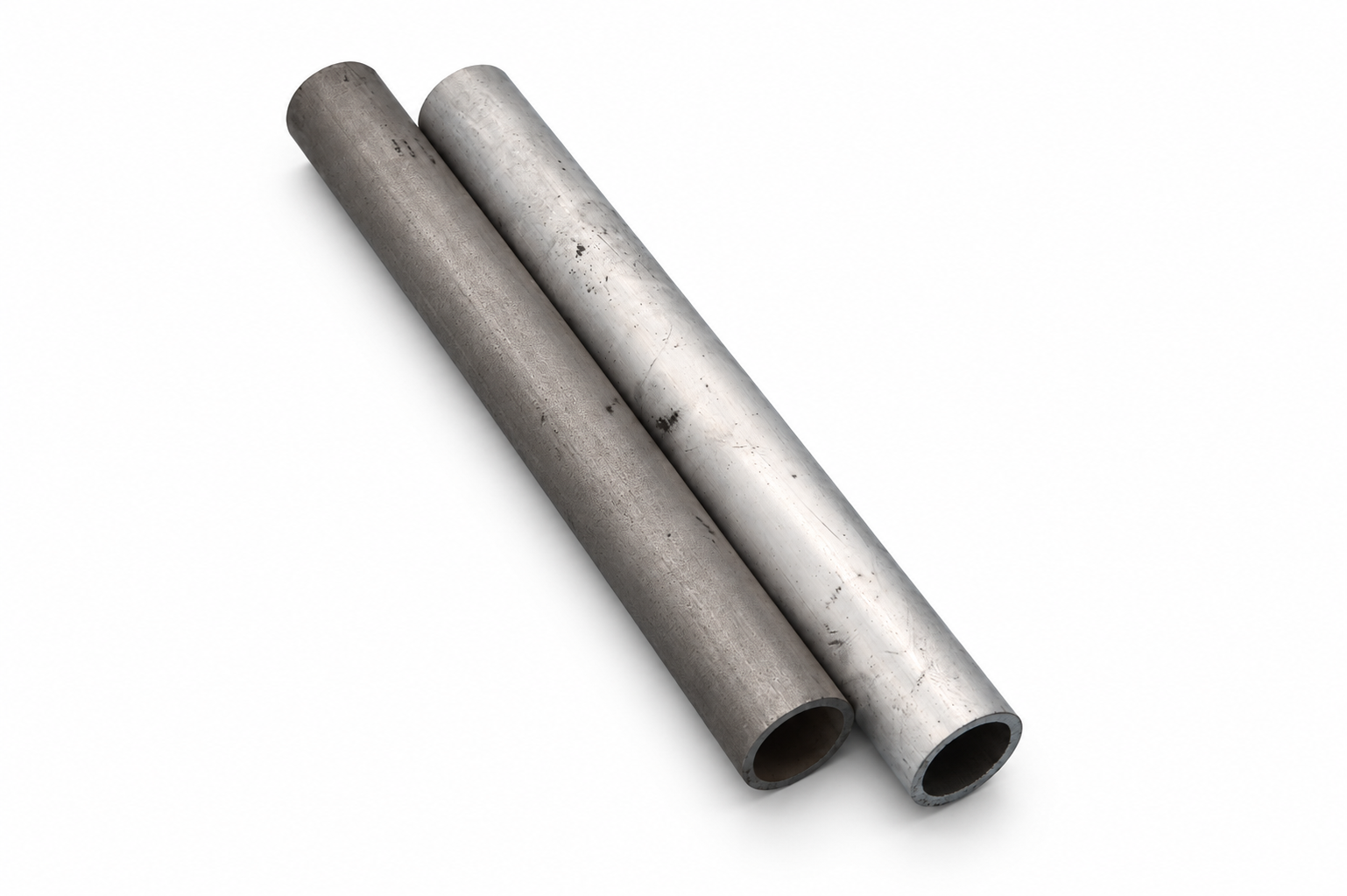
02 / Pipe material
Both can be a good investment when the material fits the job. Aluminum is our go-to for standard air systems; 304 is the stainless steel baseline for this comparison.
Aluminum’s low weight makes pipe easier to handle and reduces the weight carried by the supports. Its natural oxide layer helps protect the surface from corrosion in suitable environments. That combination makes it a good-value choice for dry, indoor compressed-air service in shops and manufacturing spaces.
We use real aluminum pipe, with Schedule 10 as our standard and Schedule 40 available on request. We match the alloy, finish and connections to the media and operating conditions; anodizing is a separate finish choice, rather than something assumed for every pipe.
304 is a widely used austenitic stainless steel, commonly described as an 18% chromium, 8% nickel grade. It offers good general corrosion resistance and is used in food and beverage equipment, tanks, valves and many industrial applications.
It is a good-value option when the job calls for its corrosion resistance and durability. Its alloy content and production costs can mean a higher initial investment. Marine chlorides, aggressive chemicals and demanding cleaning conditions may require a different grade or design.
Compare applications, corrosion resistance, weight and initial cost below ↗
For chemical, oil, fuel, fertilizer, water or potable water projects, tell us the exact service so we can review the appropriate material, seals and connections.
Compare your materials
| Feature | Aluminum | 304 stainless steel |
|---|---|---|
| Best for | Standard manufacturing, auto shops and dry, indoor air systems where low weight and practical ownership matter. | Industrial process piping, food and beverage equipment, and washdown service compatible with 304. Pharmaceutical, marine or caustic applications need a specific grade and service review. |
| Corrosion resistance | A natural oxide layer provides protection in suitable environments. Anodizing can enhance protection when specified; the alloy and media still matter. | Good general corrosion resistance from its chromium-rich protective surface. Chlorides and aggressive chemicals can require a grade beyond 304. |
| Weight | Lightweight, with less mass than comparable stainless steel pipe. | Heavier for comparable dimensions; however, 304 stainless steel can offer roughly 1.5–3 times the ultimate tensile strength of some common aluminum alloys, depending on the alloy and temper. |
| Initial cost | Good value. A practical investment for standard air systems when the material suits the application. | Good value, with a higher initial investment. Its corrosion-resistant alloy and durability can justify the added cost for the right application. |
Pressure and temperature ratings are confirmed for the selected grade, pipe size, wall schedule and connection components. Material names alone do not establish a system rating. Project costs depend on the specified materials and scope.
See the pipe up close
Talk through your materials